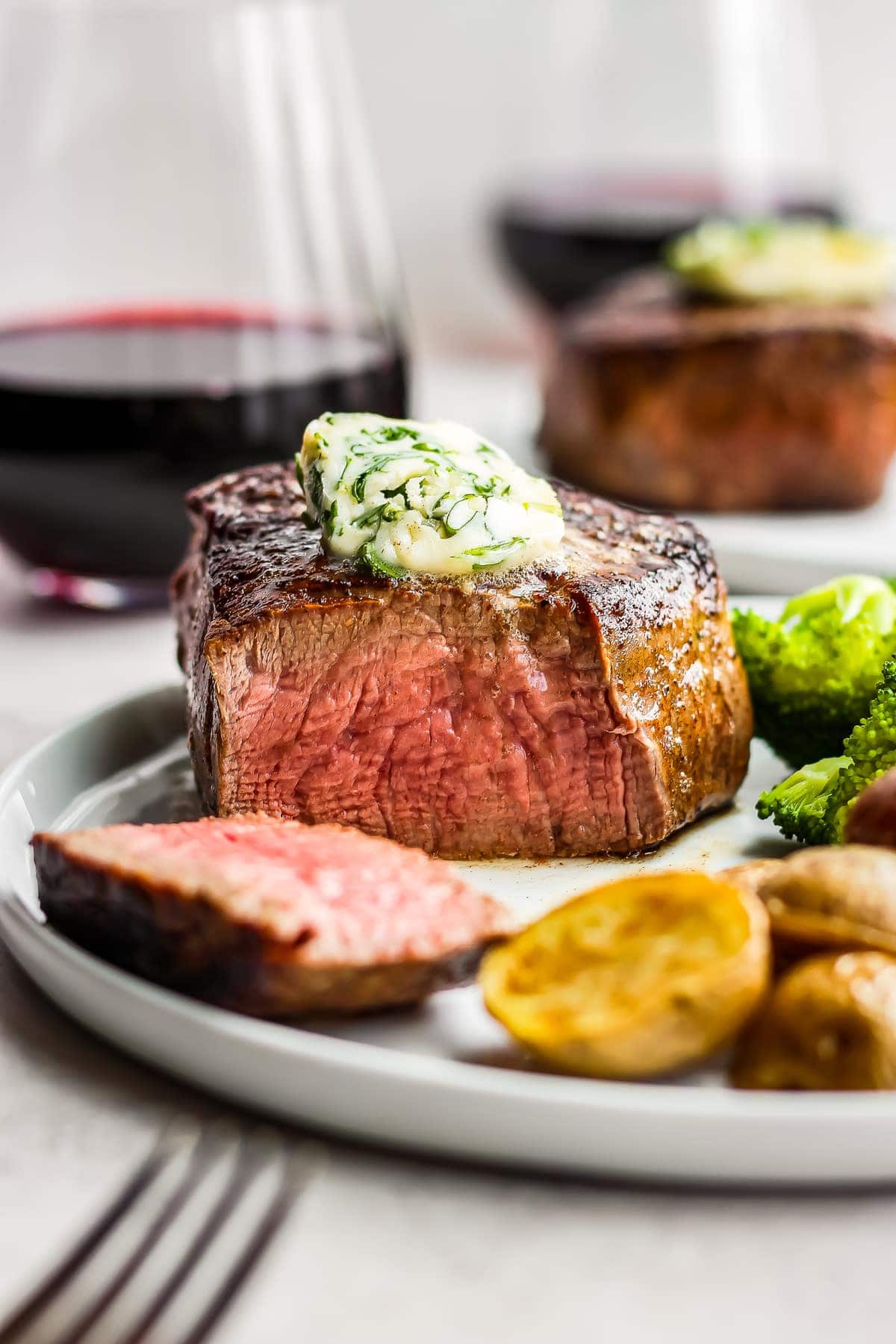
Idoes The Rib Eye Steak Contain The Fillet Mignon : Steak Wikipedia / On the other hand, ribeye steak is cut from the ribs of the cow.. This cut tends to have a lot of marbling (fat in between the muscle fibers) and makes for a very juicy steak. Ribeye steak is tender and fatty. Typically, the cut comes from the best center portion or the eye of the entire rib steak. Discard any steak with an off smell or appearance. Many companies cut all the meat away from the rib bone (frenching), but at the butcher's market, we leave that rib meat attached for additional flavor.
However the fillet is much leaner than the rib eye, which has more marbling and also contains thick veins of fat. You also have more control/options for portion size with ribeye. A rib steak without the bone; As mentioned above, if a ribeye has a bone (a rib bone, of course), the cut is properly labeled as a rib steak. A rib eye steak will offer that classic marbled appearance, and you might not believe it, but it's the generous amount of fat in the steak that gives it that classic taste.
Leanest And Fattiest Cuts Of Steak Men S Journal from www.mensjournal.com Prized among steak lovers for its marbling and flavor. It's probably important to point out that few cuts of steak are genuinely nasty. New york strip and filet mignon: A rib steak without the bone; The rest is extremely tender. Flap meat has a lot of flavour, is marbled and tender. On the other hand, ribeye steak is cut from the ribs of the cow. The ribeye might not be quite as soft as the filet mignon, but it is still significantly more tender than other cuts of beef.
You also have more control/options for portion size with ribeye.
Usually a t bone steak, rib eye steak, and filet mignon steak top the list. The rear leg of the cow is called the round, so any cuts with the word round in it come from this cut. Certain cuts of beef naturally accumulate more intramuscular fat than others. The filet is probably the safest cut. Some cuts known for their high degree of marbling are ribeye, short rib, strip, and flatiron steaks. The rib will be maybe 4 or 5 inches long and runs along one side of the steak. This cut tends to have a lot of marbling (fat in between the muscle fibers) and makes for a very juicy steak. Many companies cut all the meat away from the rib bone (frenching), but at the butcher's market, we leave that rib meat attached for additional flavor. The steak has fat marbling which contributes to the rich flavor throughout the cut. Grill as a steak, or roast. But, each cut of steak has something a bit different to offer, from fat content to tenderness to flavor. For more general information about these cuts, and for information about other cuts of beef, please see my meat 101 and meat 102 posts. So enough with the anatomy, here is an easy way to remeber where the filet and new york strip steaks some from:
Usually a t bone steak, rib eye steak, and filet mignon steak top the list. It's delicious, but it's also quick to pull together, and you can play with seasonings to your heart's desire, or make it feel luxurious with a bourbon cream sauce.once you've mastered the art of cooking the perfect steak in the oven, you can start to think about finding your perfect side dish. The bone in a porterhouse is shaped like a capital t and will vary in size depending on where on the spine it's cut from. In contrast, ribeye steak is a little tougher than filet mignon. Meat 201 is an advanced examination of the four major cuts of beef that you're likely to see at a steakhouse.
Restaurant Steak Recipe With Cilantro Steak Butter Video from www.thecookierookie.com Steak is a great main dish whether for a special occasion or a regular weeknight dinner. Some cuts known for their high degree of marbling are ribeye, short rib, strip, and flatiron steaks. A rib steak without the bone; The ribeye steak comes from the rib portion of the cow. But, each cut of steak has something a bit different to offer, from fat content to tenderness to flavor. The filet comes from the tenderloin of a cow. Many companies cut all the meat away from the rib bone (frenching), but at the butcher's market, we leave that rib meat attached for additional flavor. Two sides of the same steak.
A rib eye steak will offer that classic marbled appearance, and you might not believe it, but it's the generous amount of fat in the steak that gives it that classic taste.
Other premium cuts, such as filet, are prized for qualities other than marbling, such as extreme tenderness. Rib eye steaks are cut from the rib eye roast, which is located in the large center muscle of a cow's ribs. Meat 201 is an advanced examination of the four major cuts of beef that you're likely to see at a steakhouse. Budget wise, both are expensive cuts, but filet mignons are noticeably more costly than ribeyes. This cut is also called: You also have more control/options for portion size with ribeye. The bone in a porterhouse is shaped like a capital t and will vary in size depending on where on the spine it's cut from. Usually a t bone steak, rib eye steak, and filet mignon steak top the list. Certain cuts of beef naturally accumulate more intramuscular fat than others. Grill as a steak, or roast. Ribeye steak is tender and fatty. Two sides of the same steak. For more general information about these cuts, and for information about other cuts of beef, please see my meat 101 and meat 102 posts.
Signs of bad steak are a sour smell, dull color and slimy texture; Budget wise, both are expensive cuts, but filet mignons are noticeably more costly than ribeyes. The ribeye might not be quite as soft as the filet mignon, but it is still significantly more tender than other cuts of beef. However, the high fat content marbled through creates a very tender, juicy cut of beef too. Certain cuts of beef naturally accumulate more intramuscular fat than others.
Rib Eye Steak Wikipedia from upload.wikimedia.org Some diners prefer the fillet for its leanness and unsurpassed tenderness, while others favor the rib eye for its richness and better flavor. In contrast, ribeye steak is a little tougher than filet mignon. The rest is extremely tender. The fillet mignon is super soft since the tenderloin muscle is rarely used during the lifetime of the animal. A rib eye steak will offer that classic marbled appearance, and you might not believe it, but it's the generous amount of fat in the steak that gives it that classic taste. Some cuts known for their high degree of marbling are ribeye, short rib, strip, and flatiron steaks. It's delicious, but it's also quick to pull together, and you can play with seasonings to your heart's desire, or make it feel luxurious with a bourbon cream sauce.once you've mastered the art of cooking the perfect steak in the oven, you can start to think about finding your perfect side dish. These are some of the most famous cuts of steak, ranked from the very worst to the very best.
Cooked steak will usually stay good for 3 to 4 days in the fridge and 3 months in the freezer.
Ribeye steak is tender and fatty. It's probably important to point out that few cuts of steak are genuinely nasty. This muscle is sandwiched between the sirloin, short loin, and top sirloin. Some cuts known for their high degree of marbling are ribeye, short rib, strip, and flatiron steaks. The tenderloin portion is very thin but meaty. However, the most tender portion of the cut is the spinalis (or cap) which contains arguably the highest concentration of marbling, thus yielding a juicy, flavorful piece. On the other hand, ribeye steak is cut from the ribs of the cow. Both steaks are tender, but filet mignon is the softest. Eating a leaner cut such as a filet mignon or new york strip is a better alternative, dr. The rear leg of the cow is called the round, so any cuts with the word round in it come from this cut. Other premium cuts, such as filet, are prized for qualities other than marbling, such as extreme tenderness. These are some of the most famous cuts of steak, ranked from the very worst to the very best. The chunk of fat in the middle is often described as its key characteristic, but in fact, the name comes from one of the four muscle ligaments which looks like an eye.